 54:45
54:45This recording is not available yet.
The third largest economy in the world
Download resourcesCategories
About this session
Chadi Habib, CTO and Head of Business Solutions at WSP, opens with the widely quoted estimate that cybercrime costs the world roughly ten trillion dollars a year, on pace by some reports to overtake China's GDP by 2025, close to the world's third largest economy his title references. He warns against chasing goldfish cracker distractions: acronyms, frameworks and vendor trends that feel urgent but do not map to real risk. Organizations should instead define their actual crown jewels, client data, employee data, and confidential business flows, before spreading effort across every certification. He illustrates how fast social engineering evolves with an unnamed case where attackers used a live deepfake video call impersonating a CFO to convince an employee in Asia to wire twenty-five million dollars across eleven accounts, with no malware or perimeter breach involved. Using a Boeing Starliner anecdote about astronauts stranded in orbit, he stays optimistic as physical and virtual systems merge, but urges clients to build real technical fluency rather than just buy AI tools, since attackers keep improving and defenders must match that pace continuously.
The third largest economy in the world has created a tremendous need for solutions, consulting, talent, and investment. We will discuss the need to be clear on what are the “crown jewels” of an enterprise and focus our investments and energy in the right place. We will also discuss some thoughts on the future and what will and won’t change in the cyber world in the coming years.
Key takeaways
- Define your organization's actual crown jewels (client data, employee data, confidential business flows) before spreading effort across every certification or framework.
- Watch for 'goldfish cracker' distractions: acronyms, trending frameworks and vendor language that feel urgent but do not reduce real risk.
- Brief staff on live-deepfake social engineering; a documented case moved twenty-five million dollars across eleven accounts via a fake CFO video call, with no malware involved.
- Build internal technical fluency rather than assuming that buying AI or security software substitutes for understanding how the systems actually work.
- Budget for continuous improvement, not a one-time fix; the cybercrime economy is projected to keep growing faster than most defense budgets.
Speakers
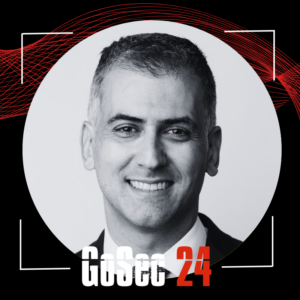
Chadi Habib
Chadi Habib was appointed as WSP’s Chief Technology Officer and Head of Business Solutions in July 2022. He has garnered over 25 years of international experience as a senior technology and business transformation executive through his previous… Read moreRead less
Chadi Habib was appointed as WSP’s Chief Technology Officer and Head of Business Solutions in July 2022. He has garnered over 25 years of international experience as a senior technology and business transformation executive through his previous roles at CGI, Desjardins Group, and Rio Tinto Engineered Products. Mr. Habib holds a bachelor’s degree in mechanical engineering from McGill University and an MBA from the Richard Ivey School of Business. In addition to serving on several boards, Mr. Habib shares his expertise in technology as a public speaker and advisor. He is also involved in several initiatives focused on women and diversity in technology.