 34:55
34:55This recording is not available yet.
Agents IA en Cyber : Pourquoi les déploiements échouent et comment réussir le vôtre
Download resourcesAbout this session
A 20-year cybersecurity veteran who sold his company Fortica to KPMG, became partner there, then joined AI firm Vooban as CISO in January, shares a personal case study of deploying AI agents in cybersecurity operations. He progresses from simple chat prompts, to shared 'project' conversations, to a custom GPT vetting new SaaS tools against compliance criteria, before attempting fully autonomous agents analyzing firewall logs: the result was bad decisions, security exposure through the immature MCP protocol, and runaway API costs of roughly $1.50 a call. Returning to experts, he traces the failure to weak prompt engineering, then explains tokens, context-window limits, truncation and 'context rot,' precise role-and-expectation prompting, model-selection tradeoffs, and the layered validation (user, developer, system, policy prompts) governing what a model will do, including how prompt-override techniques bypass restrictions. He defines an agent as an LLM plus orchestration adding state and task decomposition, stressing agents remain non-deterministic and cannot replace human judgment. A Q&A covers token cost estimation, API billing, and constraining an MCP-connected agent with elevated access from acting outside its scope.
La promesse des agents IA en cybersécurité est immense, mais la réalité sur le terrain est souvent décevante : hallucinations, résultats imprécis et projets qui déraillent. En tant que leader stratégie et cybersécurité IA chez Vooban, j'ai piloté ces déploiements et j'ai appris à la dure. Dans cette session, je ne vous parlerai pas de la théorie, mais de la pratique. Découvrez les pièges critiques qui mènent 90% des initiatives à l'échec et repartez avec des outils concrets pour construire, entraîner et déployer des agents IA performants et fiables.
Key takeaways
- Do not skip straight to autonomous agents: master single-turn prompting and shared 'project' conversations first, since most failures trace back to weak prompt fundamentals.
- Write prompts with an explicit role, context and expectations, and state what you want rather than only what you do not want; vague instructions produce vague, wandering results.
- Keep conversations and documents within a model's effective context window; performance degrades well before the stated token limit as truncation and context rot set in, producing hallucinations.
- Budget for per-call API costs separately from flat-rate seat licenses; routing bulk data like firewall logs through a pay-per-query model can produce runaway costs.
- Treat MCP-connected agents with elevated access (e.g. account deprovisioning) as a distinct attack surface; put authentication layers and guardrails in front of the protocol rather than trusting the agent's own scope.
Speakers
Samuel Bonneau
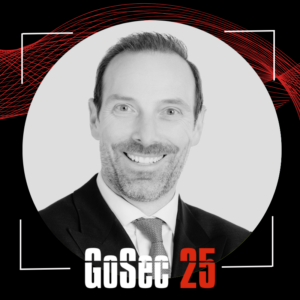
Samuel Bonneau est un expert en cybersécurité avec plus de 25 ans d’expérience, reconnu pour son approche innovante, son leadership et sa capacité à générer de la croissance stratégique. Il a joué un rôle clé dans la conception et la mise en œuvre… Read moreRead less
Samuel Bonneau est un expert en cybersécurité avec plus de 25 ans d’expérience, reconnu pour son approche innovante, son leadership et sa capacité à générer de la croissance stratégique. Il a joué un rôle clé dans la conception et la mise en œuvre de stratégies de cybersécurité auprès des plus grandes entreprises canadiennes. Aujourd’hui Leader – Stratégie et services en cybersécurité IA chez Vooban, il allie cybersécurité et intelligence artificielle pour renforcer les stratégies de défense des entreprises, leur permettant de tirer parti des dernières avancées technologiques pour une protection robuste et durable.