
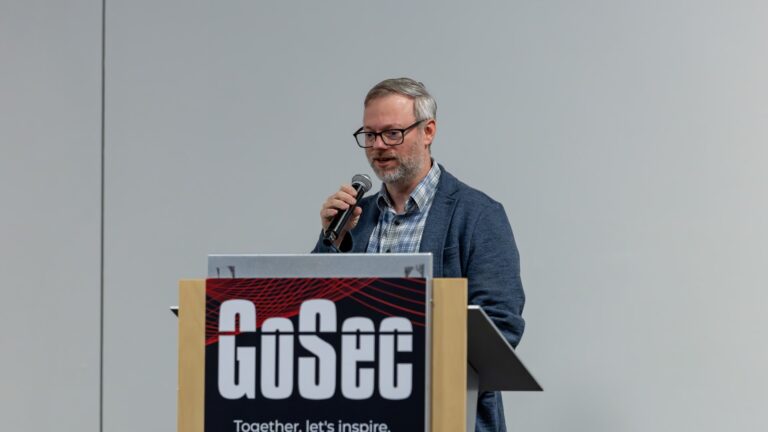
 34:56
34:56This recording is not available yet.
Defending Against Hidden Risks of AI Tools in the Workplace
Download resourcesCategories
AI & Emerging TechnologyAI SecurityPrivacy & Data ProtectionData Loss PreventionNetwork Security & Zero TrustZero Trust
Sponsored by
About this session
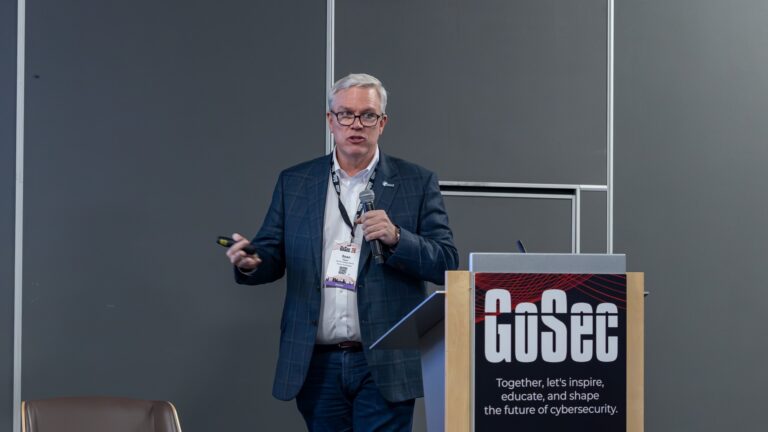
Shawn Hayward, a ThreatLocker solutions engineer based in Toronto, argues that generative AI has collapsed the skill needed to write malware: a request reframed as a legitimate professional task gets a chatbot to produce a working exploit or reverse-shell in seconds, and because each output is unique code, it can slip past signature-based defenses as an undetected zero-day, which he demonstrates by comparing a known reverse-shell snippet (blocked by Windows Defender) against a functionally identical AI-generated one (not blocked). He names a third risk category beyond bad code and open ports: AI tools that misbehave by mistake, since they cannot determine a user's intent, deleting files or sending data to the wrong recipient while running with the user's own trusted permissions. He shows prompt injection working both ways, hidden text making an AI bio generator surface a private joke as fact, and malicious emails instructing AI scanners to mark them benign, and debunks the idea that removing local admin rights alone stops ransomware, citing an unpatched Windows privilege-escalation zero-day. His prescription, shown with ThreatLocker's own product, is default-deny application allowlisting plus ring-fencing, restricting what approved applications and AI tools can do laterally, rather than relying on detection alone.
AI tools have the power to transform organizational productivity while exponentially increasing risk. Join this session to uncover how workplace AI tools can expose sensitive data, bypass controls, and introduce new attack surfaces. We’ll also explore what you can do to mitigate these risks effectively without impeding innovation.
Key takeaways
- Do not rely on signature-based detection alone: AI-generated exploit code is unique on every run, so a functionally identical payload to a known one can pass as a zero-day even when the known version is already blocked.
- Treat 'AI tool makes an honest mistake' as a distinct risk from malicious code or an open port; AI cannot determine user intent and runs with the requesting user's own trusted permissions, so it can delete or exfiltrate data by accident.
- Assume prompt injection can run both ways: hidden text in a document, email or code comment can instruct an AI scanner or assistant to misclassify content or surface information it should not, so review what AI tools actually read, not just what you ask them.
- Removing local administrator rights is necessary hygiene but does not by itself stop ransomware; pair it with default-deny application allowlisting so unapproved software, including unauthorized AI tools, cannot run at all.
- Restrict what approved applications and AI tools can do laterally (e.g. block Word from spawning PowerShell, limit an AI agent's access to only the data its task needs) instead of only deciding whether they may run.
Speakers
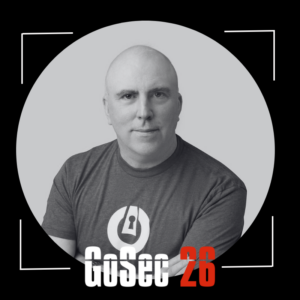
Shawn Hayward
Shawn Hayward is a Senior Solutions Engineer at ThreatLocker with more than 20 years of experience in the IT industry. Drawing on a strong background as a systems administrator, technician, and engineer, he combines deep technical expertise with a… Read moreRead less
Shawn Hayward is a Senior Solutions Engineer at ThreatLocker with more than 20 years of experience in the IT industry. Drawing on a strong background as a systems administrator, technician, and engineer, he combines deep technical expertise with a passion for cybersecurity to help organizations strengthen their security posture through Zero Trust principles.
Throughout his career, Shawn has partnered with hundreds of organizations, from small businesses to large enterprises, to design and implement effective security strategies. His commitment to education and customer success enables him to bridge the gap between technical implementation and business objectives, helping organizations make informed security decisions while achieving their operational goals.