 34:55
34:55This recording is not available yet.
GoCast Podcast: Julien Turcot & Monica Verma
Download resourcesCategories
About this session
In this GoCast interview recorded right after her keynote, Monica Verma (Monica Talks Cyber) traces her path from a cryptography master's student with no hacking background to CISO: she talked her way into an external thesis supervisor at White Hat Security, taught herself hacking through practice, and was hired by Siemens to hack medical and industrial products just as Stuxnet put security on executive agendas, which is when she discovered her ability to translate technical risk into business language for a CFO. After building and leading IT risk, IAM, cloud security and governance functions across financial services, healthcare and critical infrastructure, she decided deliberately to become a CISO and signed her first contract within ninety days. On AI, she stresses it is not magic but a system we do not fully understand, explains hallucination as a side effect of reinforcement learning that rewards answering over admitting uncertainty, cites a 40 percent lift in fraud detection from AI-augmented systems, and warns that the real near-term risk is unguarded reliance on AI for decision-making, illustrated by a prompt-injection example where an attacker manipulated an executive's AI meeting assistant into creating a fake congratulatory calendar invite.
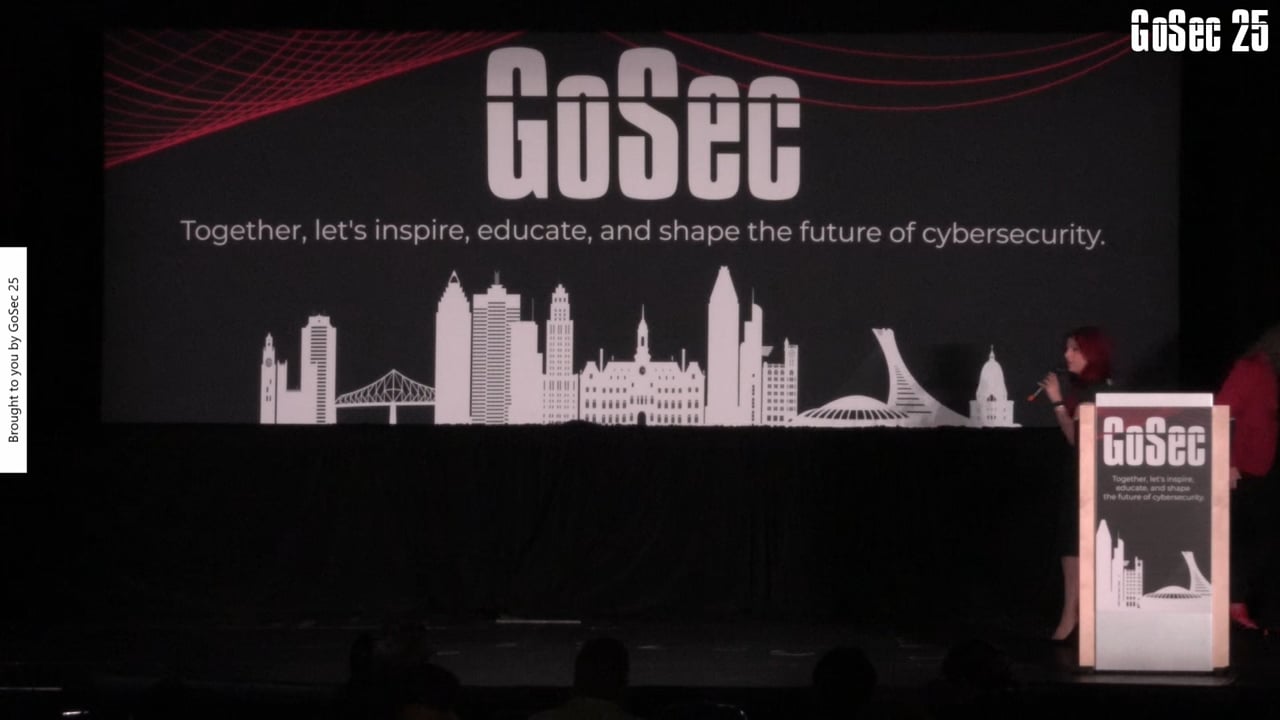
GoCast is hitting the road and heading straight to the Main Stage at GoSec 2025! Get ready for a series of exclusive mini-interviews with some of the brightest minds in cybersecurity. Experience the unique energy of GoCast live at the heart of the conference — short, dynamic, and always captivating conversations that capture the ideas, trends, and voices shaping the future of cybersecurity.
Key takeaways
- Translate technical security risk into concrete business-impact language (revenue, service disruption) for executives; this skill, not hacking ability alone, is what builds organizational influence.
- Understand hallucination as a byproduct of reinforcement learning that rewards producing an answer over admitting uncertainty, not a random glitch, when evaluating LLM reliability.
- Treat AI-augmented fraud detection as a proven, measurable gain (cited at roughly 40 percent higher detection) worth piloting, not just a hype claim.
- Guard against prompt-injection attacks on AI assistants with real-world consequences (calendar manipulation, false approvals), since the near-term AI risk is ungoverned reliance on its output for decisions, not autonomous AI takeover.
Speakers

Monica Verma
Monica Verma is a leading voice in AI, cybersecurity, leadership, cloud computing, and innovation. She works to bridge the security and talent gap, ultimately supporting both business and societal goals. With over 20 years of experience in… Read moreRead less
Monica Verma is a leading voice in AI, cybersecurity, leadership, cloud computing, and innovation. She works to bridge the security and talent gap, ultimately supporting both business and societal goals. With over 20 years of experience in technology, Monica has become an award-winning leader. Furthermore, she is recognized as one of the Top 50 Women in Tech. Through her clear and simple communication, Monica has worked closely with executives and top management. In fact, she has successfully led many security and digital transformation projects across global businesses.