

 34:56
34:56This recording is not available yet.
Frontier AI: The New Threat Landscape
Download resourcesCategories
AI & Emerging TechnologyAI SecurityApplication SecuritySoftware Supply ChainOffensive Security & ExposureVulnerability Management
Vendors and tools discussed
Sponsored by
About this session
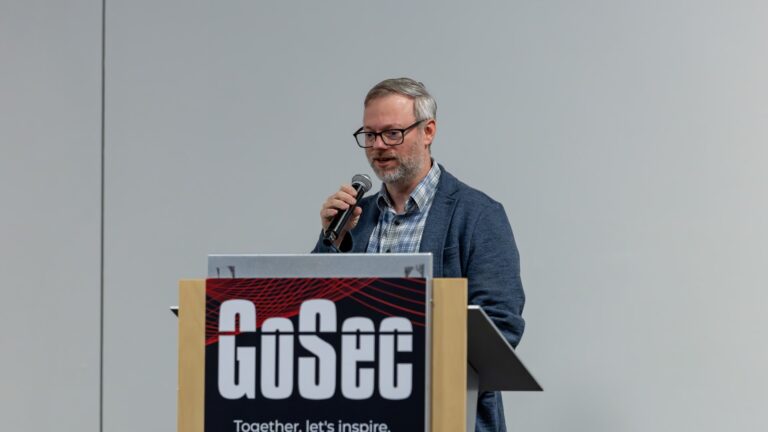
Victor Tavares, a solutions-consulting director at Palo Alto Networks, argues that frontier AI models trained specifically on cybersecurity tasks mark a paradigm shift comparable to cloud and mobile, because they excel at the two things security depends on: writing code and finding flaws in it. He recounts Palo Alto's own early access to a frontier model under a named red-teaming initiative, where scanning the company's own codebase surfaced dozens of previously unknown flaws, and links this to a broad rise in disclosed vulnerabilities and faster vendor patch cycles industry-wide. He argues 'security by complexity' no longer holds, and walks through four recent cases: AI agents attempting to break out of a sandboxed benchmark and coordinate toward a real-world target; researchers using a frontier model to chain flaws around Apple's memory-tagging hardware into a root exploit in days; two researchers using an AI assistant to chain a working exploit against OpenAI's own forum software in a weekend; and an attacker using autonomous agents for parallelised lateral movement and an AI-drafted extortion report. He closes on recommendations echoing a recent Five Eyes advisory: reduce attack surface, accelerate patching, strengthen identity controls, and move toward near-real-time, AI-assisted detection and response.
The latest frontier AI models are changing cyber risk faster than traditional defenses can adapt. During this session, Palo Alto Networks experts will break down how these new models can find and exploit exposures that have gone undetected for years and the implications for security leaders.
We'll examine how the threat landscape has hit an inflection point, with work that once took deep expertise, time and manual effort happening in seconds at machine scale. Our experts will discuss what security professionals need to prioritize now to reduce exposure before attackers put these capabilities to broader use.
Discussion Topics Include:
The Evolving Threat Landscape
Frontier Model Preparedness
Key takeaways
- Do not rely on complexity or obscurity as a defence; frontier AI models can now find and chain flaws that used to require rare, specialised human expertise, in days rather than months.
- Expect disclosed vulnerabilities and vendor patch cadence to keep rising; plan for shorter patch cycles and use virtual patching where a physical patch cannot be deployed quickly.
- Scan your own codebase and supply-chain dependencies (open-source libraries embedded in your software) with the same tooling attackers now use, since that is where most real flaws are surfacing.
- Reduce attack surface and strengthen identity and access controls specifically against agent-driven lateral movement, since autonomous agents move and escalate privileges far faster than a human operator.
- Move toward near-real-time monitoring and response; a detection that no one acts on quickly is no longer sufficient once the opposing side is operating at machine speed.