 34:56
34:56This recording is not available yet.
Le pare-feu comme composant du plan de défense de l’IA
Download resourcesCategories
AI & Emerging TechnologyAI SecurityPrivacy & Data ProtectionData Loss PreventionNetwork Security & Zero Trust
Vendors and tools discussed
Sponsored by
About this session
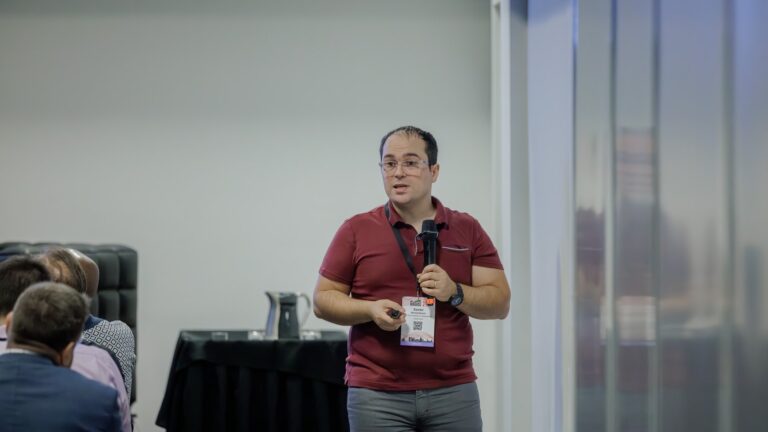
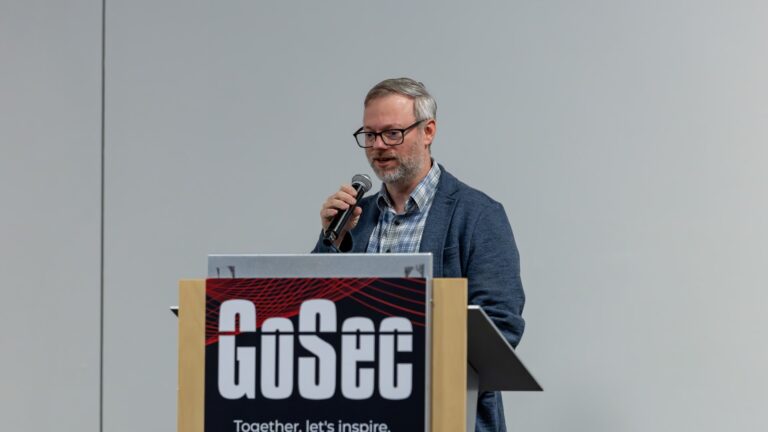
Xavier Bensemhoun, a security evangelist and strategic-accounts engineer for Check Point in eastern Canada, argues that the firewall already deployed in most networks, not a new appliance, should become the control point for securing AI traffic. He frames Check Point's AI Defense Plane as three layers (risk-surface visibility, governance, protection) applied across four control points, then narrows the talk to the firewall because it sits at the crossroads of all network traffic. He demonstrates two capabilities delivered through a firmware upgrade to R82.20: Workforce AI, which lets the firewall recognise which AI application and account type (personal versus corporate ChatGPT, DeepSeek) a request uses and apply allow, ask or block rules with data-loss-prevention checks, and AI Agent Security, which inspects traffic between an internal application and a public language model to catch and block malicious prompt injection before it reaches the model. He closes on MCP servers, described as a bridge between AI systems and infrastructure, with granular access rules for SSH, file-share and API calls made through the protocol. A Q&A covers minimum firmware versions, added latency, and fail-open versus fail-closed behaviour when the cloud diagnostic service is unreachable.
L'IA a changé la nature du trafic réseau et introduit des vecteurs d'attaque que l'infrastructure existante ne voit pas ; plutôt que d'empiler un nouveau boîtier, Check Point transforme le pare-feu déjà déployé en couche de sécurité IA.
AI is transforming the network, and we're transforming the firewall to secure it: The Firewall As Part of the AI Defense Plane.
Key takeaways
- Route AI traffic through the firewall already in place; a Check Point upgrade to R82.20 adds AI visibility and control without a new appliance.
- Distinguish personal from corporate AI accounts (personal ChatGPT versus ChatGPT Enterprise, for example) before deciding to allow, block or prompt the user, rather than blanket-blocking a given AI tool.
- Treat MCP servers as a protocol to govern explicitly: define which machine can call which MCP server and with what SSH, file-share or API scope.
- Inspect application-to-model traffic for prompt injection at the network layer, not only at the application layer, to catch attempts to exfiltrate API keys or secrets before they reach the model.
- Decide in advance whether the environment should fail open or fail closed if the cloud diagnostic service used for AI inspection becomes unreachable.
Speakers
Xavier Bensemhoun
Xavier Bensemhoun est Expert et Évangéliste en cybersécurité chez Check Point. Il intervient régulièrement lors d’événements professionnels pour sensibiliser aux enjeux de la sécurité numérique et promouvoir les bonnes pratiques du secteur. Curieux… Read moreRead less
Xavier Bensemhoun est Expert et Évangéliste en cybersécurité chez Check Point. Il intervient régulièrement lors d’événements professionnels pour sensibiliser aux enjeux de la sécurité numérique et promouvoir les bonnes pratiques du secteur. Curieux de nature et passionné par l’exploration - aussi bien technologique que spatiale - il aime faire le lien entre cybersécurité et innovation, avec une énergie communicative.